buying investment property australia
Buying Your First Investment Property in Australia: A Complete Guide for 2026
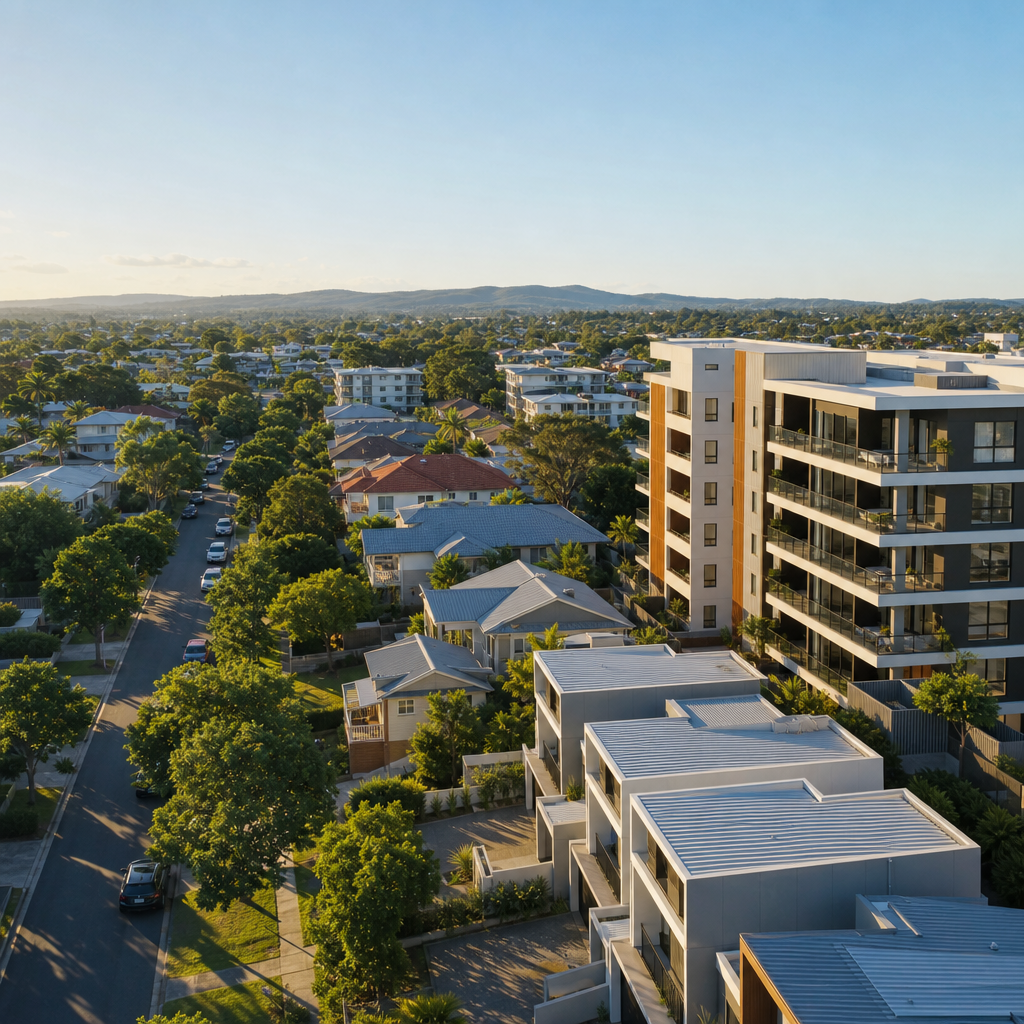
Property investment in Australia has a long track record of building real wealth for ordinary people. It is not a get-rich-quick scheme, but when you buy the right asset, in the right location, with the right finance structure, it is one of the most reliable ways to grow a portfolio over a decade or more. In 2026, with interest rates having stabilised after the sharp cycle of the early-to-mid 2020s and population growth continuing to put pressure on rental supply in most major cities, the case for entering the market is as clear as it has been for several years.
That said, the entry points have shifted. Median house prices in Brisbane, Perth, and Adelaide have moved significantly over the past three years, and the window for buying well in certain pockets is narrowing. First-time investors who sit on the fence waiting for a "perfect" market often find themselves priced out of the suburbs they originally targeted. This guide is designed to give you the tools to act confidently rather than hesitate indefinitely.
At George and Sons, we work with investors at every stage, from people buying their first property to developers managing multi-unit complexes. The advice in this guide reflects what we see working on the ground in South East Queensland and beyond. It is practical, specific, and grounded in real numbers. Let us walk you through everything you need to know.
Key Takeaways
- Most lenders require a minimum 10-20% deposit for an investment property, with 20% avoiding lenders mortgage insurance (LMI).
- Gross rental yield in Australia varies widely by location, typically ranging from 3% in premium Sydney suburbs to 6%+ in regional Queensland markets.
- Negative gearing can reduce your taxable income but should be treated as a tax outcome, not an investment strategy.
- Researching vacancy rates, infrastructure spending, and population growth is more valuable than chasing headlines.
- Ongoing costs including land tax, property management, strata levies, and insurance can erode returns if not factored in from day one.
- Ownership structure, whether individual, joint, company, or trust, has significant tax implications and should be reviewed with an accountant before you sign anything.
Summary Table: Key Investment Property Factors at a Glance
| Factor | Typical Range (Australia, 2026) | Notes |
|---|---|---|
| Deposit required | 10-20% of purchase price | 20% avoids LMI; some lenders accept 10% with LMI |
| Stamp duty | 1.4-5.5% of purchase price | Varies by state; investors generally pay full rate |
| Gross rental yield | 3.0-6.5% | Higher in regional areas; lower in premium metro zones |
| Property management fee | 7-12% of gross rent | Plus leasing fees and routine inspection costs |
| Land tax threshold (QLD) | $600,000 (land value) | Thresholds differ by state; stacks with other holdings |
| Negative gearing tax saving | Marginal rate x net loss | Only beneficial if total return (yield + growth) exceeds cost |
| Interest-only loan period | Typically 5 years max | Reverts to principal and interest; stress-test repayments |
| Capital gains tax discount | 50% after 12 months | Applies to individuals and trusts, not companies |
Why Invest in Australian Property?
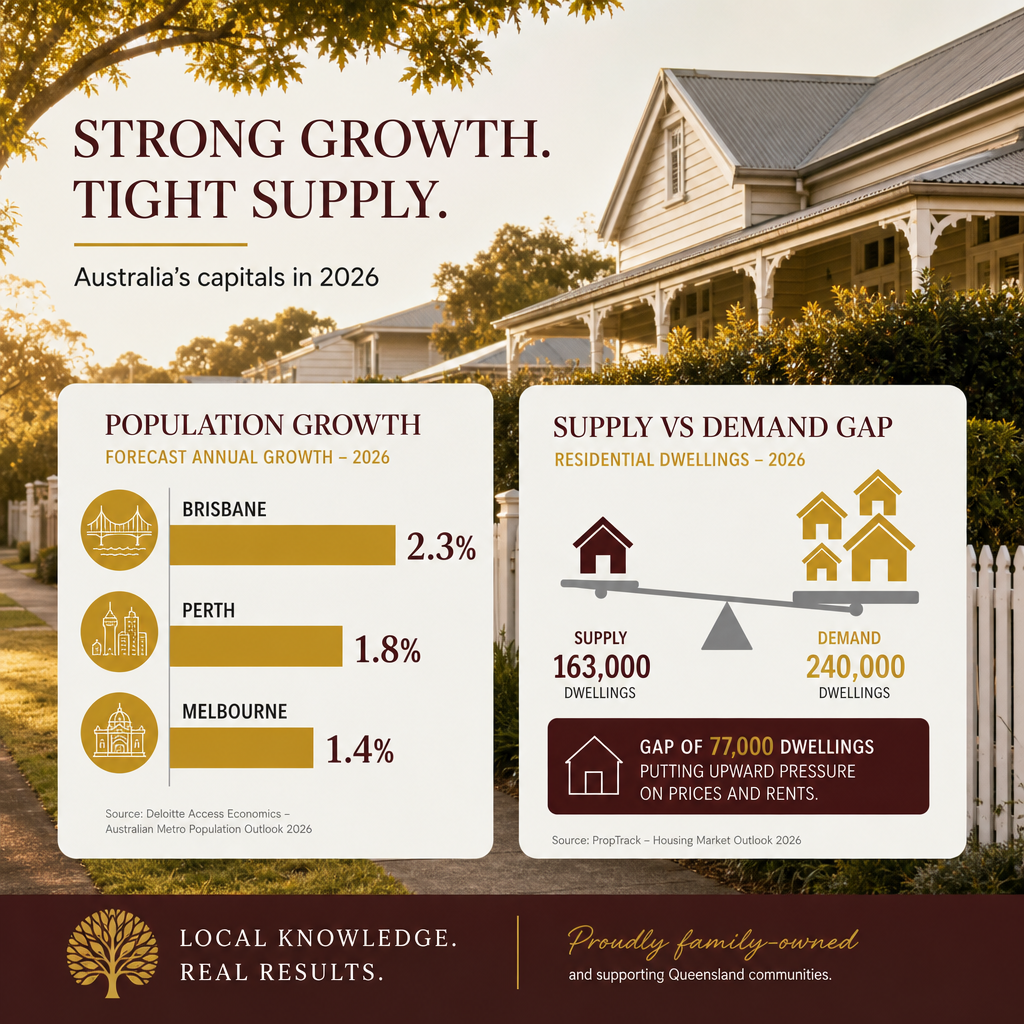
Australia has one of the most resilient residential property markets in the world, and that resilience is structural, not accidental. Several forces converge to support long-term price growth and rental demand.
Population Growth and Housing Supply Constraints
The ABS reported that Australia's population crossed 27 million in 2024, and projections for 2026 point to continued net overseas migration running well above the long-run average. The National Housing Finance and Investment Corporation (NHFIC) has consistently found that new dwelling completions are falling short of underlying demand, particularly in Queensland, Western Australia, and Victoria. That gap between supply and demand is what keeps vacancy rates low and rental growth positive.
In practical terms, a low vacancy rate, anything under 2% is generally considered tight, gives landlords pricing power at lease renewals and reduces the risk of extended periods without rent. In Brisbane's inner and middle ring suburbs, SQM Research data for early 2026 shows vacancy rates holding under 1.5% in many postcodes. That is a landlord's market.
Long-Term Capital Growth
Australian residential property has delivered average annual capital growth of approximately 7% nationally over the past 30 years, though this varies significantly by location, property type, and cycle timing. Past performance is not a guarantee, but the structural factors supporting demand, limited land, concentrated population in coastal cities, strong migration, and cultural preference for homeownership, are not disappearing.
The most important insight here is that time in the market consistently outperforms timing the market. Investors who bought in Brisbane's outer suburbs in 2016 and held through the noise of 2018-2019 saw extraordinary gains by 2022-2023. Those who waited for the "right time" missed a decade of compounding growth.
Tax Environment for Investors
Australia's tax system, while complex, is generally favourable to property investors relative to many comparable countries. Negative gearing concessions, the 50% capital gains tax (CGT) discount for assets held over 12 months, and depreciation deductions on newer properties all improve the after-tax return on investment. We cover these in more detail below.
How Much Deposit and Finance Do You Need?
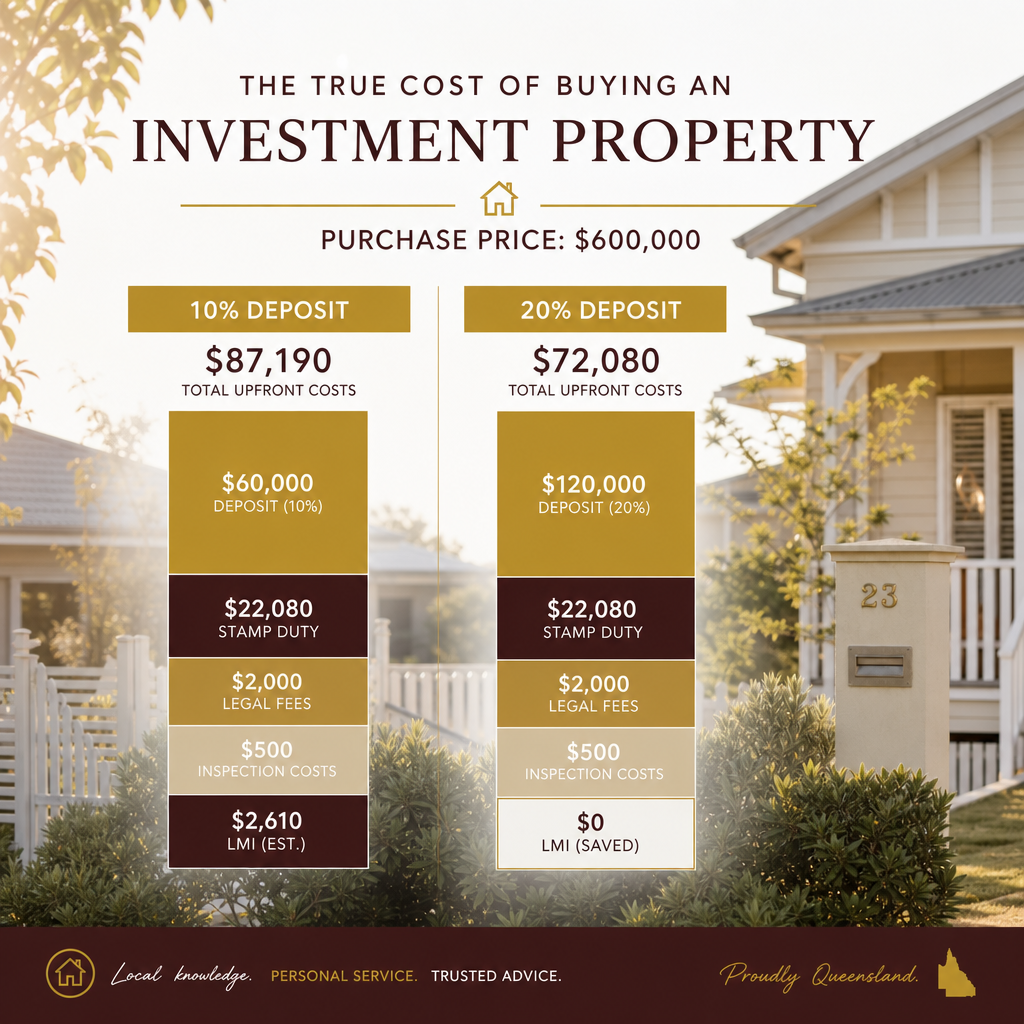
This is the first practical hurdle for most investors, and it is also where many people underestimate the full cost. For a detailed breakdown of deposit requirements, see our dedicated guide on how much deposit you need to buy a house in Australia.
The Deposit Itself
For an investment property, most major lenders require a minimum 10% deposit, but 20% is the threshold at which you avoid lenders mortgage insurance (LMI). LMI protects the lender, not you, and on a $600,000 property with a 10% deposit, the LMI premium can run to $12,000-$18,000, depending on the lender and loan-to-value ratio. That is a real cost that eats into your returns from day one.
If you already own your home and have built up equity, many investors use a cash-out refinance or equity loan against their primary residence to fund the investment property deposit. This is a common and legitimate strategy, but it means your family home is part of the risk equation. Discuss this structure carefully with a mortgage broker before proceeding.
Borrowing Capacity for Investors
Investors are assessed differently to owner-occupiers. Lenders apply a stress-test rate, typically 3 percentage points above the actual loan rate, and they also apply a "shading" to rental income, counting only 70-80% of gross rental income in serviceability calculations. This means your borrowing capacity as an investor is often lower than you expect, especially if you already carry an owner-occupier mortgage.
For finance options tailored to property investors, our team at George and Sons can point you in the right direction. Visit our finance page for more information on how we work with investors on financing strategy.
Beyond the Deposit: Upfront Costs to Budget For
The deposit is only part of the upfront cost. Budget separately for:
- Stamp duty: In Queensland, on a $600,000 investment property, stamp duty is approximately $17,325 for investors (no first home concessions apply).
- Legal and conveyancing fees: $1,500-$2,500 is typical.
- Building and pest inspection: $400-$800.
- Loan establishment fees: $0-$1,000, depending on the lender.
- Property management setup: Some agencies charge a letting fee equal to one to two weeks rent.
On a $600,000 purchase, a realistic upfront cost estimate including a 20% deposit is $138,000-$145,000. Going in with less than that creates stress before you have even received your first rent payment.
Understanding Rental Yield vs Capital Growth
These two concepts represent the two ways a property generates return, and most investors need to understand how they interact before choosing a target market.
Rental Yield Explained
Gross rental yield is annual rent divided by purchase price, expressed as a percentage. A property bought for $500,000 that rents for $500 per week generates $26,000 per year in gross rent, for a gross yield of 5.2%.
Net rental yield strips out the ongoing costs, property management fees, rates, insurance, maintenance, and land tax, and is the more useful figure for assessing actual cash flow. On that same property, net yield might be closer to 3.5-4.0% after costs.
In 2026, SQM Research and CoreLogic data shows gross rental yields broadly as follows across capital cities:
- Darwin: 6.0-7.0% (highest yields, but also higher vacancy risk)
- Perth: 4.5-5.5%
- Brisbane: 4.0-5.0%
- Adelaide: 4.0-4.8%
- Melbourne: 3.0-3.8%
- Sydney: 2.8-3.5% (lowest yields, historically offset by strong capital growth)
Higher-yielding markets typically offer lower capital growth prospects. Lower-yielding markets, particularly Sydney's inner suburbs, have historically delivered stronger long-term growth but require more capital to service the gap between rent received and holding costs.
Capital Growth: The Long-Game Return
Capital growth is the increase in the property's value over time. On a $600,000 property growing at 7% per annum, the asset is worth approximately $835,000 after five years. That $235,000 gain, less costs and CGT, is often the primary driver of total return for metropolitan investors.
The challenge with capital growth is that it is unrealised until you sell. You cannot use it to pay the mortgage while you hold. This is why a pure capital growth strategy requires strong personal cash flow or a well-structured loan to bridge the annual shortfall.
Which Strategy Is Right for You?
The honest answer is that most serious investors target a blend: a property with a reasonable yield that does not require significant top-up from personal income, in a location with credible long-term growth drivers. Chasing pure yield in a struggling regional market can leave you with a property that is easy to rent but depreciates in value. Chasing pure growth in a premium suburb can leave you cash-flow negative to the point of financial stress.
Negative Gearing and Positive Gearing Explained
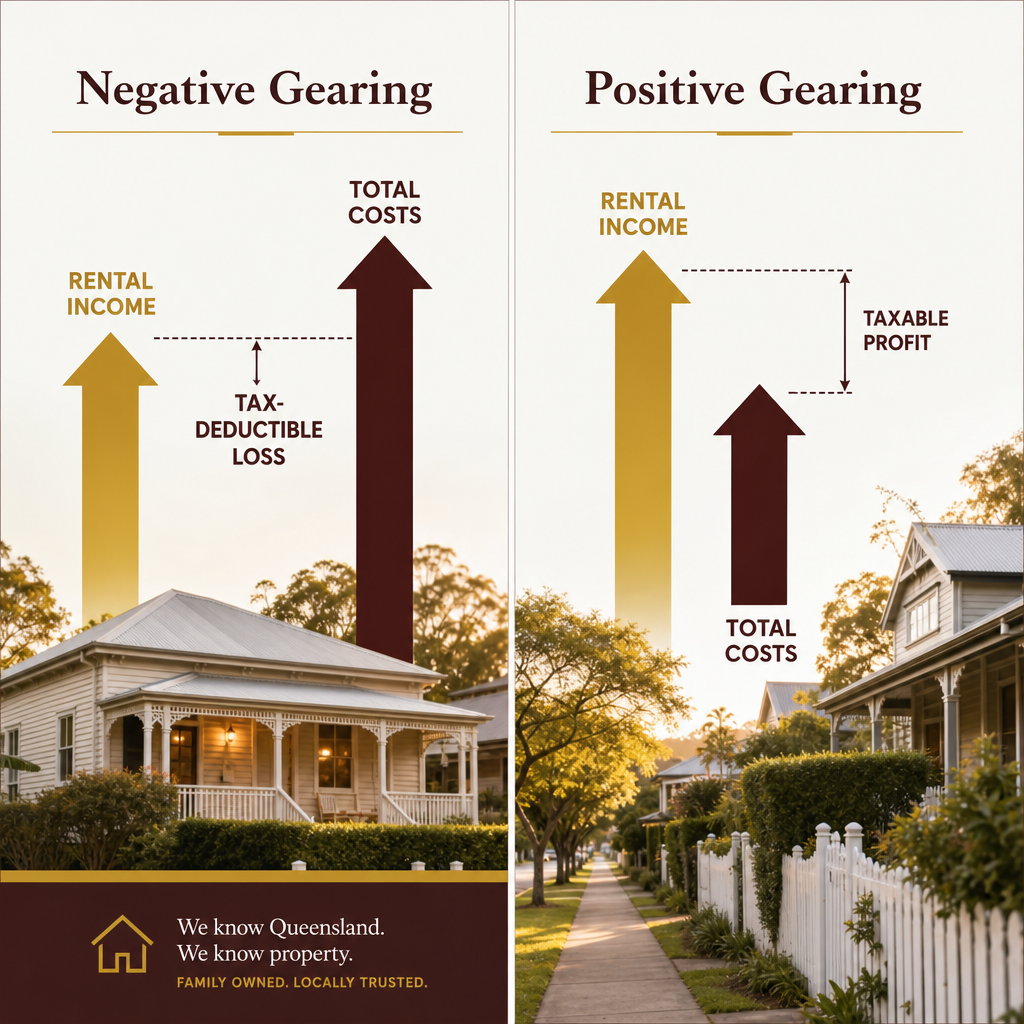
Few concepts attract as much confusion, and political noise, as negative gearing. Here is what it actually means in practice.
What Is Negative Gearing?
A property is negatively geared when the costs of owning it, interest payments, management fees, rates, insurance, repairs, depreciation, exceed the rental income it generates. The net loss can be offset against your other income, including your salary, reducing your taxable income and therefore your tax bill.
For example: if your rental property generates $28,000 in rent but costs $38,000 per year to hold (including interest), you have a $10,000 loss. If your marginal tax rate is 37%, you save approximately $3,700 in tax. The property still costs you $6,300 out of pocket. That shortfall only makes financial sense if the property is growing in value by more than $6,300 per year.
The Critical Caveat
Negative gearing is a tax outcome, not a strategy. Too many first-time investors are sold negatively geared properties on the basis of the tax refund alone, without a credible growth story attached. If the property does not grow in value, the tax saving does not compensate for the ongoing cash drain. The ATO publishes data showing that approximately 2.2 million Australians declared rental losses in recent tax years. Not all of those investments will deliver the capital growth needed to justify the holding cost.
What Is Positive Gearing?
A positively geared property generates more rental income than it costs to hold. This is simpler and safer for investors who do not want ongoing out-of-pocket expenses. The trade-off is that positive cash flow is taxable income, and positively geared properties are often found in markets with lower capital growth prospects.
Neither approach is universally superior. The right answer depends on your income, tax position, cash flow capacity, and investment timeline. This is exactly the kind of decision where advice from a qualified accountant is not optional. It is essential.
How to Research Suburbs and Assess Investment Demand
Buying well is not about following headlines. "Brisbane is booming" is not a suburb research strategy. Here is how to actually assess a location.
The Five Data Points That Matter
1. Vacancy rates. SQM Research publishes monthly vacancy rate data by postcode. Anything under 2% is healthy for investors. If vacancy is above 3%, be cautious.
2. Days on market. Short days on market for rental listings signals strong demand. Long days on market means tenants have options and you will likely need to price down.
3. Infrastructure pipeline. Cross reference with state government infrastructure budgets. New train lines, hospital expansions, and university campuses reliably support demand and price growth in surrounding suburbs. In Queensland, the 2032 Olympic Games infrastructure programme continues to influence demand corridors in South East Queensland.
4. Population and employment growth. ABS regional population data and QGSO (Queensland Government Statistician's Office) projections show which corridors are absorbing migrants and interstate arrivals. Employment diversity matters too. A suburb dependent on one employer or one industry carries concentration risk.
5. Supply pipeline. Search the local council's development applications to see how many new dwellings are approved or under construction. A suburb with 300 new apartments approved in the next 12 months will face rental pricing pressure regardless of current vacancy rates.
On the Ground Research Still Matters
Data is necessary but not sufficient. Walking the suburb, visiting local shops, talking to property managers, and attending open homes gives you qualitative signals that no dashboard captures. I learned this early in my career when I was selling apartments in a Beenleigh complex. The developer was sceptical when we first sat down, and frankly, I had to earn that trust transaction by transaction. What made the difference was not just knowing the data, it was knowing the complex. I walked through every unit, understood the body corporate, knew which aspects got the morning sun, and could answer any question a buyer raised about the building without hesitation. That knowledge closed sales that data alone would not have. Five years on, we have sold 12 apartments in that complex and counting.
The same principle applies to investment property research. Know your target suburb the way you would know your own street.
Ongoing Costs: What Eats Your Returns
Many first-time investors model their returns on rental income minus mortgage repayments and are surprised when actual cash flow falls short. Here is a realistic accounting of the ongoing costs you need to factor in.
Property Management Fees
In Queensland, property management fees typically run 8-12% of gross rent, plus a letting fee (usually one to two weeks rent) when a new tenancy begins. On a property renting at $550 per week, that is $2,900-$4,300 per year in management fees plus periodic letting costs. A good property manager is worth every dollar of that fee. A poor one will cost you far more in vacancies, maintenance mismanagement, and tenant problems.
Land Tax
Land tax is a state-based tax applied to the unimproved value of land above a threshold. In Queensland, the threshold for individuals is $600,000 (land value, not property value). Importantly, all investment properties you own in a state are aggregated when calculating your land value. If you own three investment properties in Queensland with a combined land value of $900,000, you pay land tax on $300,000 worth of land. This catches investors off guard as their portfolio grows.
Every state has different thresholds and rates. Consult an accountant familiar with multi-state property portfolios if you are investing across state lines.
Strata and Body Corporate Levies
For apartments and townhouses, strata or body corporate levies cover common area maintenance, building insurance, and sinking fund contributions. These vary enormously, from $2,500 per year for a simple complex to $10,000+ per year for a building with a pool, gym, and concierge. Always request the body corporate financials and the last AGM minutes before purchasing a strata title property. Underfunded sinking funds are a red flag.
Insurance
Landlord insurance covers loss of rent, malicious damage by tenants, and liability. A standard landlord insurance policy in Queensland runs $1,200-$2,000 per year depending on the property type and level of cover. Do not rely on standard home and contents insurance for an investment property. It will not respond to a claim the way you need it to.
Maintenance and Repairs
Budget 0.5-1.0% of the property value per year for maintenance on an established property. On a $600,000 property, that is $3,000-$6,000. Newer properties cost less in the early years, but wear and depreciation accumulates over time.
Structuring Ownership and Tax Considerations
How you hold an investment property has long-term implications for tax, estate planning, and liability. This section is general information only. You should seek advice from a qualified accountant and solicitor before making any structural decision.
Individual Ownership
Most first-time investors buy in their own name or as tenants in common with a partner. The key advantage is simplicity and access to the 50% CGT discount for assets held over 12 months. The disadvantage is that rental income and capital gains are taxed at your personal marginal rate.
Joint Tenants vs Tenants in Common
Joint tenancy means the surviving owner automatically inherits the other's share on death. Tenants in common allows each party to own a specified share (e.g. 60/40) and to leave their share to whoever they choose in their will. For investment properties owned by couples with different income levels, holding unequal shares as tenants in common can reduce the combined tax burden.
Trusts
A discretionary (family) trust can distribute income and capital gains flexibly among beneficiaries, which is useful for managing tax across a family group. However, trusts cannot access the CGT discount in the same streamlined way as individuals in all circumstances, cannot negative gear in a way that flows back to individual tax returns (losses are trapped in the trust), and have higher establishment and compliance costs. A trust is a useful structure for certain investors but is not a default recommendation.
Companies
Companies are taxed at a flat rate (25% for base rate entities in 2026) and do not receive the 50% CGT discount. For most property investors, a company structure is not optimal purely from a property investment perspective, though it may suit a developer or someone building a large commercial portfolio.
The bottom line: get the structure right before you buy. Changing structure after the fact triggers stamp duty and CGT events. The cost of getting advice upfront is trivial compared to the cost of restructuring incorrectly held assets later.
Case Studies
Case Study 1: Brisbane Middle-Ring Unit, Positive Cash Flow Focus
A first-time investor purchased a two-bedroom, two-bathroom unit in a middle-ring Brisbane suburb in early 2023 for $495,000. Purchase costs totalled approximately $22,000 including stamp duty, legal fees, and inspection costs. The investor put down a 20% deposit ($99,000) and took an interest-only loan of $396,000 at 6.2% per annum.
Financials at acquisition:
- Annual interest cost: $24,552
- Weekly rent: $530 (at purchase)
- Annual gross rent: $27,560
- Management fees (9%): $2,480
- Insurance and rates: $3,200
- Body corporate levy: $4,800
- Total annual costs: $35,032
- Net loss (before depreciation): $7,472
A quantity surveyor's depreciation schedule found $9,800 in claimable depreciation in year one, turning the investment cash flow positive on an after-tax basis for the investor (marginal rate 37%). By early 2026, the property had been re-leased at $610 per week, narrowing the holding cost significantly, and an independent valuation placed the property at $580,000, a gain of $85,000 in three years.
Case Study 2: South East Queensland Land and House Package, Growth Focus
A couple purchased a house and land package in a growth corridor suburb south of Brisbane in mid-2022 for $620,000. The land was registered and construction completed by early 2023. With a 20% deposit, their loan was $496,000 interest-only at 6.5%.
Year one financials:
- Annual interest: $32,240
- Weekly rent: $580
- Annual gross rent: $30,160
- Management, insurance, rates, maintenance: $8,500
- Total costs: $40,740
- Net annual loss: $10,580
The depreciation schedule on the newly built property showed $18,500 in claimable depreciation in year one, generating a substantial tax refund at their combined marginal rates. By 2026, the property had been independently valued at $780,000, a gain of $160,000 in approximately four years. The rental income had also grown to $650 per week, reducing the cash flow gap considerably.
Both of these outcomes were helped by strong South East Queensland market conditions. They are real scenarios drawn from our client work, not projections, but past performance should not be taken as a guarantee of future results in your specific market or at your specific entry point.
Client Perspective
"We were nervous about buying interstate and were not sure what to expect from a smaller agency. What surprised us was the level of detail George and Sons brought to every conversation. They knew the complex, the street, the comparable sales, everything. By the time we exchanged, we felt confident we had done proper due diligence. Three years in, the numbers are tracking ahead of our original plan."
(Name withheld at client's request)
Ready to Start?
Property investment rewards preparation and penalises impulse. If you are ready to move from research to action, or if you simply want to talk through your situation with someone who knows the South East Queensland market in detail, get in touch with our team at George and Sons. You can also browse available investment properties on our listings page.
References
-
Australian Bureau of Statistics (ABS), Population and Housing Data, 2024-2026. The ABS publishes quarterly population estimates and annual housing census data used to assess population growth trends and housing supply dynamics across Australian states and territories. Available via the ABS website.
-
SQM Research, Residential Vacancy Rate Reports, 2026. SQM Research publishes monthly vacancy rate data by suburb and postcode, along with rental listing days on market and asking price trends. Used by investors and analysts to assess current rental market conditions.
-
Australian Taxation Office (ATO), Rental Properties Guide 2025-2026. The ATO's annual rental properties guide covers deductible expenses, depreciation rules, negative gearing, and capital gains tax treatment for investment properties. Essential reference for understanding the tax treatment of property investment income and losses.
-
National Housing Finance and Investment Corporation (NHFIC), State of the Nation's Housing Report, 2025. NHFIC's annual report models housing supply and demand across Australia, identifying undersupply conditions by state and dwelling type. A key source for understanding structural demand drivers.
-
CoreLogic, Residential Property Market Data, 2026. CoreLogic provides capital growth data, median price statistics, rental yield benchmarks, and days on market metrics across Australian capital cities and regional markets. Widely cited in property research and valuations.
-
Queensland Revenue Office, Land Tax Information, 2026. The Queensland Government's Revenue Office publishes current land tax thresholds, rates, and calculation guidance for Queensland property investors. Directly relevant to investors building portfolios in Queensland.
Get tailored guidance
Send us your question and we will reply within one business day.
Send us the article topic, suburb, or property goal you want help with and we will reply within one business day.
Send my questionFAQ
How much deposit do I need to buy an investment property in Australia?
Most lenders require a minimum 10% deposit for an investment property, though 20% is the preferred benchmark because it avoids lenders mortgage insurance (LMI). On a $600,000 purchase, that means having $60,000-$120,000 available for the deposit alone, before stamp duty and other upfront costs. If you own your home and have built equity, you may be able to use that equity as security rather than saving a fresh deposit.
What is rentvesting and is it a good strategy in 2026?
Rentvesting means renting the home you live in while buying an investment property in a market where the numbers stack up. It allows investors to access investment property tax concessions from day one and enter markets they can afford. The disadvantage is that you do not build equity in a home of your own and miss out on the principal place of residence CGT exemption. It should be modelled carefully with an accountant.
Should I use an interest-only loan for my investment property?
Interest-only loans reduce repayments during the interest-only period (typically five years) and maximise tax deductions since interest is fully deductible for investment properties. The risk is that the loan balance does not reduce, and repayments increase materially when the loan reverts to principal and interest. You should stress-test your finances against the revert rate and discuss the structure with a mortgage broker.
How does negative gearing actually reduce my tax?
When your investment property costs more to hold than it earns in rent, the net loss can be offset against your other taxable income such as your salary. For example, if you earn $120,000 and your investment property produces a $12,000 net loss, your taxable income drops to $108,000. At a marginal rate of 37%, that saves approximately $4,440 in tax. However, you are still $7,560 out of pocket. Negative gearing only makes financial sense if capital growth exceeds the ongoing shortfall.
Which Australian state is best for property investment in 2026?
In 2026, Queensland and Western Australia show strong rental yields, low vacancy rates, and population-driven demand. South East Queensland benefits from 2032 Brisbane Olympics infrastructure investment. Victoria and New South Wales offer stronger long-term capital growth in premium locations but require more capital. The best state depends on your budget, risk tolerance, cash flow position, and investment timeline.
When should I use a buyer's agent for an investment property purchase?
A buyer's agent is worth considering when buying in an unfamiliar market, purchasing interstate, or when time is limited. A good buyer's agent accesses off-market opportunities, negotiates on your behalf, and reduces emotional decision-making. Fees are typically 1-2.5% of the purchase price. If buying locally with the time and knowledge to research thoroughly, a buyer's agent is not compulsory, but for interstate or unfamiliar markets the fee is usually justified.
What are the main ongoing costs I need to budget for as an investor?
Key ongoing costs beyond the mortgage include property management fees (8-12% of gross rent), landlord insurance ($1,200-$2,000 per year), council rates ($1,500-$3,000 per year), land tax if land value exceeds the state threshold, strata or body corporate levies for units and townhouses, and routine maintenance. Budget 35-45% of gross rental income for all holding costs excluding the mortgage.
Do I need a property manager, or can I self-manage my investment property?
Self-managing is legal but carries risks around residential tenancy legislation compliance, dispute management through QCAT, and time cost. Queensland's Residential Tenancies and Rooming Accommodation Act is detailed and changes periodically. For most investors, a professional property manager is worth the fee due to reduced vacancy risk, compliant tenancy management, and time freed for other activities.
Margy George
Property and finance guidance from the George & Sons team.
Keep reading
buyers advocate australia
What Does a Buyer's Advocate Do in Australia? A Complete 2026 Guide
21 min read
negative gearing Australia
Negative Gearing in Australia Explained: How Property Investors Reduce Tax in 2026
26 min read
best real estate agent
How to Find the Best Real Estate Agent in Australia: A Practical Guide
21 min read
Ready for clarity?
Get a calm, practical plan for your next property move.
Buying, selling, finance, or renting - tell us what you are working on and we will come back with the most useful next step.
Tell us what you need help with.
Send a quick enquiry and the team will come back with a clear next step.
Request a callback