refinancing
Refinancing Your Home Loan in Australia: When to Switch, What It Costs and How to Do It in 2026

Refinancing means replacing your current home loan with a new one, usually with a different lender, to get a lower rate, better features or access to equity. It is worth doing when the interest you save over the time you hold the loan exceeds the cost of switching. Work out your break-even point first, then compare loans.
Most borrowers set their loan up once and never look at it again. That is expensive. Lenders compete hard for new customers, and the rate you were offered at settlement is rarely the rate you are paying today. If your loan is two or more years old, or your fixed term is about to end, a review is overdue.
This guide is for existing borrowers, both owner-occupiers and investors, not first-time buyers. It covers the signs it is time to switch, a simple break-even calculation, the real costs, how lenders reassess you, the step-by-step process, and when to use a broker. For the basics of first-time borrowing, see our Home Loans in Australia guide and our Investment Property Loans guide.
Key Takeaways
- Refinancing only pays when your monthly saving recovers your switching costs within the time you will actually keep the loan.
- A rate gap that looks small can still be worth thousands of dollars a year on a larger balance.
- Costs to check include discharge fees, application and valuation fees, fixed-rate break costs and lenders mortgage insurance (LMI) if your equity is below 20%.
- Lenders treat a refinance as a new application. They reassess your income, expenses, credit history and the current property value, and apply APRA's 3 percentage point serviceability buffer.
- Investors should plan equity release and loan structure before chasing the next purchase.
- A free, no-obligation review is the fastest way to see whether your current loan still competes with today's market.
Summary Table: Your Refinancing Options at a Glance
| Goal | What you do | Main thing to check | Best suited to |
|---|---|---|---|
| Lower the rate | Switch to a more competitive lender, or ask your current lender to match | Fees and cashback conditions versus the saving | Borrowers whose rate has drifted above the market |
| Exit a fixed term | Move to a new fixed or variable loan when the term ends | Revert rate and any break costs if you leave early | Borrowers about to roll onto a higher variable rate |
| Access equity | Increase the loan against the property's current value | LVR limits, LMI and what the funds are used for | Renovators and investors buying again |
| Consolidate debt | Roll car loans or cards into the mortgage | Longer term can mean more total interest | Borrowers with several higher-rate debts |
| Change features | Add an offset account, redraw or split loans | Package fees versus the benefit | Borrowers who hold savings or want flexibility |
What Refinancing Is and Why Australians Do It
Refinancing is replacing your existing home loan with a new loan, either with your current lender or a new one. Australians refinance mainly to secure a lower rate, exit a fixed term, access equity, consolidate debt or change loan features such as an offset account. The right reason decides whether it is worth doing.
The new loan pays out the old one, and you repay the new lender on the new terms. Nothing about owning the property changes. Only the debt behind it does.
A lower rate. This is the most common reason. Lenders often reserve their sharpest rates for new customers, so loyalty is rarely rewarded. The cash rate matters here. According to the Reserve Bank of Australia (https://www.rba.gov.au/statistics/cash-rate/), the cash rate target peaked at 4.35% in November 2023 and stayed there until February 2025. The RBA then cut it to 4.10% in February 2025, 3.85% in May 2025 and 3.60% in August 2025. Check the RBA's website for the current target before you run your numbers, as it may have moved since this article was published. Lenders do not always pass movements on in full, which is why comparing is worthwhile.
The end of a fixed term. Many borrowers fixed during the low-rate years. When the term ends, the loan usually reverts to a variable rate chosen by the lender, which may not be competitive. This is the most time-sensitive reason to act.
Accessing equity. If your property has risen in value or you have paid down the loan, you may be able to borrow against the difference for renovations or another purchase.
Consolidating debt. Rolling a car loan or credit card into the mortgage usually lowers the rate on that debt. The catch is that you repay it over a much longer term, so you can end up paying more interest overall unless you make extra repayments.
Changing loan features. An offset account or redraw facility can reduce interest if you hold savings. A loan without them may be costing you more than its rate suggests.
Signs It Is Time to Refinance (and the Break-Even Calculation)
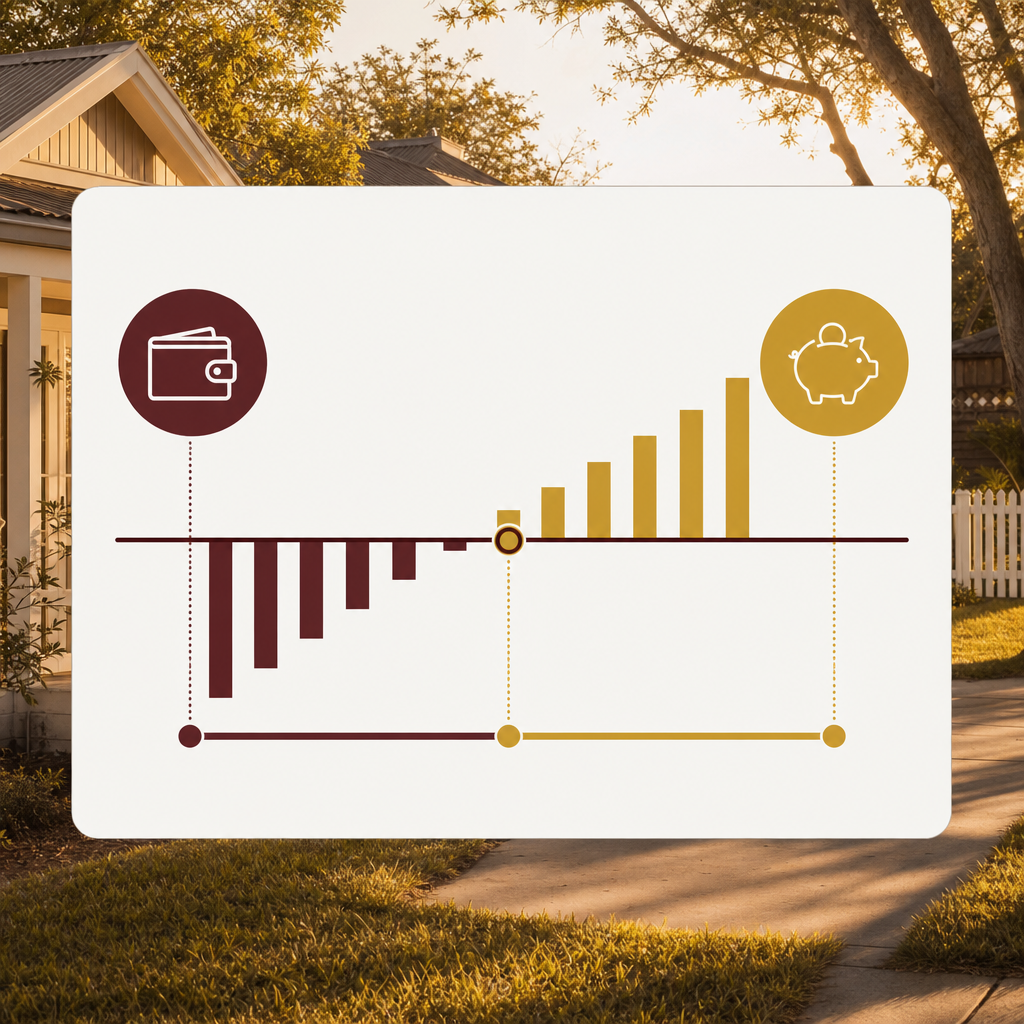
It is time to refinance when your rate is meaningfully above what comparable borrowers are being offered, your fixed term is ending, or your needs have changed. The test is simple: divide your total switching costs by your monthly saving. If you recover the cost within the time you will comfortably keep the loan, the switch works.
Signs worth acting on:
- Your fixed term ends within the next few months.
- You have not compared your rate with the market for more than a year.
- Your property value has risen, so your loan-to-value ratio (LVR) is now lower than when you borrowed.
- You hold savings in a separate account earning less than your mortgage rate, with no offset.
- Your income has grown or a debt has been paid off, which may improve your borrowing position.
- You plan to renovate or buy again and need access to equity.
A worked example
Here is a hypothetical borrower with a $600,000 loan and 30 years remaining. We compare repayments at 6.20% and 5.70%. These are illustrative rates, not a quote or a current market rate.
Source: George & Sons illustrative calculation using the standard loan amortisation formula (hypothetical loan, principal and interest, monthly repayments, rounded).
| Interest rate | Approx. monthly repayment | Approx. annual repayments |
|---|---|---|
| 6.20% | $3,675 | $44,100 |
| 5.70% | $3,482 | $41,790 |
| Difference | about $192 | about $2,310 |
A half a percentage point gap saves roughly $192 a month on this loan. Now apply the break-even test. If switching costs total $1,500 (a hypothetical figure covering fees and any valuation), then $1,500 divided by $192 is about 7.8 months. After roughly eight months, the switch is paying for itself. If a lender pays a cashback or waives fees, break-even comes sooner. The Australian Government's Moneysmart website has a mortgage switching calculator you can use to test your own figures.
Two cautions. First, compare the full cost of the loan, not only the headline rate, because annual package fees can erase a small saving. Second, if you plan to sell within a year or two, a long break-even period may mean the switch never pays.
A typical scenario
Consider a borrower whose fixed rate is about to expire. They have heard nothing from their lender beyond a standard letter. When they check, the revert rate sits well above what new customers are being offered elsewhere. They have also been saving in a separate account with no offset. By switching to a competitive variable loan with an offset, they lower the rate and cut interest on their savings at the same time. The lesson is that the end of a fixed term is a decision point, not a formality. This is a generic illustration, not a specific client result.
What Refinancing Really Costs
Refinancing costs usually include a discharge or settlement fee from your old lender, application and valuation fees from the new one, possible fixed-rate break costs, and LMI if your equity is below 20%. Many lenders waive some fees or offer cashback, but always check the conditions attached.
Discharge fees. Your existing lender charges an administrative fee to close the loan and release the mortgage. Exit fees on new variable-rate home loans have been banned in Australia since 1 July 2011, but discharge and settlement fees still apply. Check your loan contract for the amount.
Application and valuation fees. The new lender may charge to assess your application and value the property. Many lenders waive these for refinancers, especially on larger loans, so ask rather than assume.
Fixed-rate break costs. If you leave a fixed loan before the term ends, your lender may charge a break cost. It is generally based on how the fixed rate compares with wholesale funding costs, the remaining term and the balance. It can be zero or substantial. Ask your lender for a written estimate before you commit, since it is the single biggest cost variable. Waiting for the term to end is often the cheapest path.
Lenders mortgage insurance. LMI protects the lender, not you. It is typically charged when your loan exceeds 80% of the property's value. A new LMI premium can wipe out the benefit of a lower rate, so check your LVR against a realistic valuation before applying.
Cashback and clawbacks. Some lenders offer cashback to win refinancers. Read the conditions. If you leave within a set period, the lender may require you to repay it.
Hidden costs. Consider also the time cost, any change to your offset arrangements, and any extra interest if you extend your loan term. A lower repayment from a longer term is not the same as a better deal.
How Lenders Reassess You
Lenders treat a refinance as a fresh application. They reassess your income, expenses, debts, credit history and the current value of the property, then test whether you could afford repayments at a rate well above the one offered. APRA expects a serviceability buffer of 3 percentage points above the loan rate.
According to the Australian Prudential Regulation Authority (https://www.apra.gov.au/), authorised deposit-taking institutions are expected to assess serviceability using an interest rate buffer of at least 3 percentage points above the product rate. That buffer was introduced in October 2021. So if a loan carries a 6% rate, you may be tested at 9%. Your real repayments do not change, but your approval depends on passing the test.
Key factors lenders weigh:
- Serviceability. Income, living expenses, other debts, credit card limits (counted in full, even if unused) and dependants all matter. Cutting unused card limits before applying can help.
- LVR. Your loan balance as a share of the current property value. Below 80% generally avoids LMI and opens the sharpest rates.
- Credit history. Missed payments, defaults and multiple recent credit applications can reduce your options. Applications leave enquiries on your credit file.
- Property value. The lender orders its own valuation. It may be higher or lower than your expectation, and it directly changes your LVR.
- Loan purpose and property type. Lenders can apply tighter policy to some apartments, certain locations and investment loans.
A reassessment can work in your favour. If your income has grown or your debts have shrunk since you first borrowed, you may qualify for a better rate or a larger loan than before. It can also work against you. A borrower who has added a car loan and a larger credit card limit may find the new test harder than the original one.
Refinancing an Investment Property
Investors refinance to lower rates, release equity for the next purchase, or restructure debt for better cash flow. Lenders assess rental income, existing debts and LVR across your whole portfolio, so structure matters as much as the rate. Plan the refinance before you chase the next property.
The detail of investment lending sits in our Investment Property Loans guide, so here is what is specific to refinancing.
Releasing equity. If your property has risen in value, you may be able to borrow against the gain. As a simple illustration, a property valued at $900,000 with a $500,000 loan has an 80% borrowing limit of $720,000. The difference, $220,000, is the maximum usable equity before LMI applies, subject to the lender's serviceability test. This is a hypothetical calculation, not a lending offer. The released funds are commonly used as a deposit and costs for the next purchase.
Restructuring for cash flow. Options include moving to an interest-only period, which lowers repayments but does not reduce the principal, and separating investment debt from home debt into distinct loan splits. Keeping the two clearly apart makes record-keeping and tax reporting cleaner. Speak to your accountant about the tax treatment of any structure.
Rental income matters. Lenders typically shade rental income when assessing it, and they want evidence it is realistic. An up-to-date rental appraisal supports your application and shows whether your rent is keeping pace with the market. See our Rental Appraisal guide for how that works.
Cross-collateralisation. Securing multiple properties against each other can limit your flexibility when you sell or refinance one of them. Review how your loans are secured before you add another.
The Refinancing Process Step by Step
The refinancing process runs in six stages: set your goal, check your numbers, compare lenders, apply, get a valuation and approval, then settle. Timeframes vary by lender and complexity, but most delays come from missing documents, so preparing paperwork early is the fastest way to speed things up.

- Set your goal. Decide whether you want a lower rate, equity, debt consolidation or new features. Your goal shapes which loan suits you.
- Check your numbers. Gather your current loan statement, rate, remaining term, any fixed-term end date and an estimate of the property's value. Request a break-cost estimate if you are on a fixed rate.
- Compare lenders. Look at rate, fees, offset and redraw, and cashback conditions. Use the comparison rate as a guide, but remember it assumes a standard loan and may not reflect your situation.
- Apply. Provide payslips, tax returns if self-employed, bank statements, identification and details of all debts. Incomplete applications are the most common cause of delay.
- Valuation and approval. The lender values the property and assesses your application. Approval timing varies. Simple files can move within days, while more complex files take longer.
- Settlement. The new lender pays out the old one and the mortgage is discharged and re-registered. Your new loan begins, and your old direct debits and offset arrangements should be closed or redirected. Keep your old loan open and funded until you receive written confirmation of settlement.
As a guide, allow several weeks from application to settlement, and longer if the file is complex or you are releasing equity. Ask your lender or broker for current turnaround times, since these shift with demand.
One practical tip: do not stop at the new lender's offer. Take the competing offer back to your current lender and ask them to match it. Some will. It can save you the switching costs entirely.
Broker Versus Going Direct
A mortgage broker compares multiple lenders on your behalf, while going direct means dealing with one lender, often your current one. Brokers must act in your best interests under Australian law. George & Sons' in-house finance team adds a further advantage: it works alongside our sales and property management teams.
Going direct. It is quick if you simply want to ask your current lender for a better rate. The limit is obvious: you only see one lender's products, and it has little incentive to offer its best rate unless you push.
Using a broker. A broker can compare options across their lender panel, handle the paperwork and manage the application through to settlement. Since 2022, brokers have been subject to a best interests duty under the National Consumer Credit Protection Act, as regulated by the Australian Securities and Investments Commission (https://asic.gov.au/). Brokers are generally paid commission by the lender, so ask how yours is paid and whether you would face any clawback if you leave early. A mortgage broker refinance is most useful when your situation is not straightforward, such as self-employed income, multiple properties or an investment portfolio.
The George & Sons advantage. Our finance team sits in the same office as our sales and property management teams. That matters in refinancing because the three questions are connected. What is my property worth? What rent does it earn? What can I borrow against it? One team can answer all three without you repeating your story to three different businesses. For more on how the services fit together, see our George & Sons Property Services Explained page, and our Why Choose George & Sons page for how we work.
What Changes When Your Lender, Agent and Property Manager Share the Same Information
The cheapest rate on paper is not always the best refinance. My view is that refinancing decisions go wrong when the loan is treated as separate from the property. The loan is only one half of the equation. The valuation, the rent and the sale plan are the other half.
Here is what I mean in practice. In January 2021 I was referred in to appraise a newly built Beenleigh apartment complex for its developer. He was openly sceptical that an agent could add much, and said as much: "not sure you can really do anything, but give it a go." I sold the first apartment, and five years on we have sold 12 and the work continues. What won him over was not clever marketing. I learned everything about the complex and its Body Corporate, walked buyers through it and took a genuine interest in what each purchaser needed.
That same habit is what makes a refinance smoother. A lender's valuer is assessing the same things buyers care about: the building, the Body Corporate, recent comparable sales and local demand. An agent who knows that detail can tell you honestly what your property is likely to be worth before you apply, and whether a valuation shortfall might push your LVR over 80% and trigger LMI. A property manager who knows your rent roll can tell you whether your rental income is realistic before a lender questions it.
My contrarian position is this: before you chase half a percentage point, spend an hour checking your equity position, your rent and your plans for the next three years. If you may sell soon, a refinance with a long break-even period is the wrong move, however good the rate looks. If you may buy again, the structure of the loan matters more than the headline rate. Having sales, property management and finance in one place means that conversation takes one meeting, not three.
Ready to Check Whether You Could Be Paying Less?
If you want to know where you stand, book a free refinancing review with the George & Sons finance team. We will compare your current loan against today's market, run the break-even numbers with you and tell you plainly if staying put is the better option. Visit the contact page on the George & Sons website to find your nearest office and book a time.
References
- Reserve Bank of Australia, Cash Rate Target: https://www.rba.gov.au/statistics/cash-rate/
- Australian Bureau of Statistics, Lending Indicators (includes external refinancing data): https://www.abs.gov.au/statistics/economy/finance/lending-indicators/latest-release
- Australian Prudential Regulation Authority (home lending serviceability buffer): https://www.apra.gov.au/
- Australian Securities and Investments Commission (credit licensing and best interests duty for brokers): https://asic.gov.au/
- Moneysmart, Australian Government (mortgage switching calculator and home loan guidance): https://moneysmart.gov.au/
Get tailored guidance
Send us your question and we will reply within one business day.
Send us the article topic, suburb, or property goal you want help with and we will reply within one business day.
Send my questionFAQ
When is the best time to refinance a mortgage?
The best time is when your saving recovers your switching costs within the period you expect to keep the loan. Common triggers are the end of a fixed term, a rate that has drifted above the market, rising property value that lowers your LVR, or a change in your goals. Run the break-even calculation first.
How much does it cost to refinance a home loan in Australia?
Costs vary by lender and loan. They can include a discharge fee from your old lender, application and valuation fees from the new one, fixed-rate break costs and LMI if your equity is below 20%. Many lenders waive some fees or offer cashback. Get all costs in writing before you commit.
Is it worth refinancing for a small rate difference?
It can be, particularly on a larger balance. A half a percentage point gap on a $600,000 loan saves roughly $192 a month in a hypothetical example. Whether it is worth it depends on your switching costs, annual fees and how long you will keep the loan.
Will refinancing affect my credit score?
An application creates a credit enquiry on your file, and multiple applications in a short period can reduce your options. The lender will also review your credit history, repayments and debts. Compare carefully and apply to a limited number of lenders.
Can I refinance if I am on a fixed rate?
Yes, but you may face a break cost if you leave before the term ends. The cost depends on your rate, the remaining term and wholesale funding conditions. Ask your lender for a written estimate. Often the cheapest approach is to wait until the fixed term ends and then switch.
Should I use a mortgage broker to refinance?
A broker can compare lenders and manage the paperwork, which helps most when your situation is complex, such as investment portfolios or self-employed income. Brokers must act in your best interests. Ask how they are paid and whether any clawback applies. Going direct can work if you only want to ask your current lender to match a better rate.
Margy George
Property and finance guidance from the George & Sons team.
Keep reading
borrowing capacity
Borrowing Capacity in Australia: How Lenders Calculate It and 7 Ways to Increase It in 2026
21 min read
home loans
Home Loans in Australia: A Buyer's Guide to Finance, Pre-Approval and Borrowing Power in 2026
15 min read
stamp duty when buying property australia
Stamp Duty When Buying Property in Australia: How Much You'll Pay in 2026
28 min read
Ipswich 4300
Selling or renting out in 4300?
We specialise in sales and property management across the 4300 postcode. Pick your suburb for local rents, Census figures and how we work there.
Selling
Ready for clarity?
Get a calm, practical plan for your next property move.
Buying, selling, finance, or renting - tell us what you are working on and we will come back with the most useful next step.
Tell us what you need help with.
Send a quick enquiry and the team will come back with a clear next step.
Request a callback